
Most enterprise leaders treat design as a superficial paint job. They don’t realize that an unengineered visual identity can destroy decades of premium market equity overnight. Here is the ultimate cautionary tale in brand commoditization.
The Illusion of Modernity
In 2009, Tropicana reigned as the undisputed, premium leader of the orange juice category, commanding billions in revenue. Then, the company fell into the ultimate corporate design trap: chasing safe, minimalist aesthetic fads in a desperate attempt to look "clean and contemporary."
They mistook a generic design trend for actual brand evolution. They didn't realize that a breakthrough brand shouldn't just adapt to look modern but it must defend its unique visual territory at all costs.
The Blind Strategic Pivot
When executing a rebrand, conventional agencies treat the process as an aesthetic refresh rather than a high-stakes business transition. Tropicana's leadership didn't ask how to reinforce their premium positioning or protect their historical equity.
Instead, they asked a shallow, template-driven question: How do we make our packaging look sleek and minimalist? By abandoning their visual imagination to fit into a generic design default, they walked right into a commercial trap.
Surrendering Mental Real Estate
While elite design systems fight tooth and nail to protect their mental space, Tropicana systematically erased theirs.
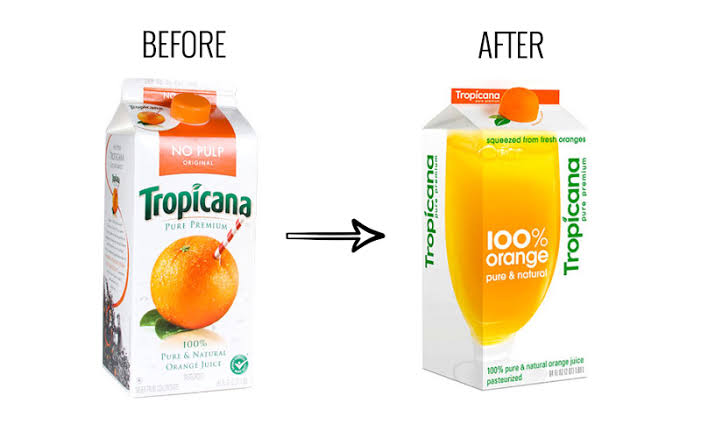
They stripped away their most valuable visual real estate - the iconic imagery of an orange with a straw pushed directly into it and replaced it with a generic, soulless glass of juice. They traded raw emotional impact for sterile aesthetic perfection.
To a consumer rushing down a crowded supermarket aisle, the brand vanished. Their premium product suddenly looked exactly like a cheap, generic store-brand commodity.
The Dilution of Identity
True design engineering requires every creative decision to explicitly reinforce a brand’s premium authority. Tropicana did the exact opposite.
They flattened their classic typography, flipped their logo orientation vertically, and introduced bland geometric elements that diluted their core narrative. The new visual system stripped away the subconscious cues of fresh, premium quality.
Within just six weeks of launching the new packaging, sales plummeted by a staggering 20 percent.
Breaking the Invisible Contract
A world-class visual identity is an invisible, non-negotiable contract of recognition with your audience. When you discard your foundational visual anchors without an ironclad strategic purpose, you shatter consumer trust.
Tropicana's sudden aesthetic pivot backfired catastrophically because it broke the emotional connection built over decades. Consumers didn't just dislike the new look but they literally could no longer find the brand on the shelves, forcing the company to pull the design and revert to the original packaging.
The Cost of Blandness
This legendary failure proves an absolute law of modern commerce: a flawed design system can commoditize a market leader overnight.
Creative execution, strategic positioning, and visual identity are completely inseparable from your company's financial valuation.
At Artifexx Designs, we don't fix your brand by making you blend into safe, identical industry templates. We engineer uncompromising visual universes where your heritage is weaponized, and your competition simply ceases to exist.


